Cyprus Food: Traditional Cypriot Dishes, Meze and Halloumi
Traditional Cypriot food means meze with up to 30 small dishes, grilled halloumi, souvla cooked over charcoal and kleftiko slow-cooked in a clay oven. Halloumi has been a Protected Designation of Origin since 2021 and is made from sheep’s and goat’s milk with mint. According to Visit Cyprus, a meze at a taverna costs around €28 per person with a drink.
We are Kimmy and Christian, we live in Coral Bay on the west coast of Cyprus, and the local taverna is part of our everyday life. So what do you eat in Cyprus, and how do you order a meze without being full halfway through? This guide to Cyprus food covers the most popular traditional dishes, halloumi cheese, desserts, Commandaria and zivania – plus where to try authentic Cypriot food around Coral Bay and Paphos. All information is as of November 2026, with sources at the end.
Cypriot Cuisine: What Makes Food in Cyprus Special
The cuisine of Cyprus is Mediterranean at heart: lots of vegetables and salad, olives and olive oil, fresh herbs such as coriander, oregano and mint, fish and seafood, meat grilled over charcoal, and cheese made from sheep’s and goat’s milk. Many dishes share their names with Greek cuisine, but the Cypriot variation often tastes different – think coriander, cinnamon or halloumi in the pot. Above all, the island’s food culture is about sharing: you order for the whole table and everyone tries a bit of everything.
Several Cypriot products are protected in the EU, much like Champagne or Parma ham. Besides halloumi, kolokasi from Sotira and the dessert wine Commandaria hold a Protected Designation of Origin (PDO). The Paphos sausage, lountza and sausages from the Pitsilia region, loukoumi from Geroskipou, zivania and, since 2024, the ring-shaped pasta tertziellouthkia carry a Protected Geographical Indication (PGI).
Cypriot Meze: How the Traditional Feast Works
A meze (often called mezedes in Cyprus) is not one dish but a whole meal of small plates of food. According to the Cyprus Tourism Organisation, it can run to as many as 30 dishes. The order is usually the same:
- Bread, dips and salad: a basket of fresh village bread, olives, several dips and a Cypriot salad.
- Small warm dishes: grilled halloumi, lountza, sausage or stuffed vine leaves (koupepia).
- Fish: in a fish meze, for example whitebait (marida), red mullet (barbouni) or deep-fried kalamari.
- Meat: sheftalia and souvlaki, stews such as stifado or afelia, and often souvla or kleftiko.
Besides the meat meze, many traditional tavernas also serve a fish meze. According to Visit Cyprus, a meze at a taverna with one drink costs around €28 per person (as of March 2025). More prices are in our guide to Cyprus currency and prices.
Halloumi Cheese: Cyprus’s Most Famous Food
Halloumi is what Cyprus is most famous for on the plate. The semi-hard cheese is made from sheep’s or goat’s milk, sometimes with cow’s milk added. It has a high melting point, so you can grill it or fry it in a pan without it running. In Cyprus it is also eaten fresh or grated over pasta.
Halloumi was registered as a PDO in the EU in April 2021, and the rules have applied since 1 October 2021. Genuine halloumi PDO comes from Cyprus, contains sheep’s and goat’s milk and, according to the Cypriot Ministry of Agriculture, must always contain mint. In the supermarket you pay €13.70 to €16.50 per kilo, according to Visit Cyprus (as of March 2025).
A by-product of cheese-making is anari cheese, a soft whey cheese. Fresh anari is eaten with honey or carob syrup, the dried version is grated over pasta. You can buy halloumi, anari, honey and olives at the municipal market in Paphos Old Town or in the supermarkets listed on our page about shopping in Coral Bay.
Traditional Cypriot Dishes: Kleftiko, Souvla and More
You will find these traditional dishes on almost every taverna menu in Cyprus. Use the table as a quick guide when you order:
| Dish | What it is |
|---|---|
| Kleftiko | lamb with garlic, bay leaves, rosemary, lemon and oregano, slow-cooked in a sealed clay oven in its own juices, usually with potatoes |
| Souvla | large chunks of lamb, pork or chicken with herbs, grilled on a skewer over charcoal |
| Souvlaki | small skewers of grilled meat, often in pitta bread with salad |
| Sheftalia | sausages of minced meat, onion and parsley wrapped in caul fat and grilled |
| Afelia | pork marinated in red wine and coriander seeds, served with cracked wheat (pourgouri) |
| Stifado | beef or rabbit stew with plenty of onions, vinegar and wine |
| Tavas | lamb or beef with tomatoes, onions, potatoes and cumin in a clay pot |
| Koupepia | vine leaves stuffed with minced meat and rice |
| Makaronia tou fournou | baked pasta with minced meat, cinnamon and a béchamel topping with halloumi |
| Kolokasi | taro root, stewed with tomatoes or fried as a meze dish |
| Trahanas | dried mix of soured milk and wheat, cooked as a traditional soup with halloumi |
According to the Cyprus Tourism Organisation, the name kleftiko comes from kleftis, the word for robber: legend has it that bandits cooked stolen meat hidden in the ground. Souvla is a favourite for celebrations and picnics. If you can’t decide, order a meze – most of these meat dishes will turn up on the table anyway.
Cypriot Sausage and Cured Meat: Lountza and Loukaniko
- Lountza Pitsilias: pork that is salted, soaked in dry red wine and smoked over branches. On the meze plate it usually comes fried or grilled, often with halloumi.
- Pafitiko loukaniko: the sausage from our region. Minced pork is matured in local red wine, spiced and sun-dried in villages in the Paphos district.
- Loukaniko Pitsilias: a smoked sausage from the mountain villages of Pitsilia, also matured in red wine and served fried or grilled.
Dessert in Cyprus: Loukoumades, Loukoumi and Soutzoukos
- Loukoumades: deep-fried dough balls soaked in syrup or honey, the traditional sweet for Epiphany in January.
- Loukoumi from Geroskipou: the Cypriot version of Turkish delight. Geroskipou is right next to Paphos, and its loukoumi is a PGI product.
- Spoon sweets (glyko tou koutaliou): fruit such as walnut, quince or cherry preserved whole in thick syrup and traditionally offered to guests.
- Soutzoukos: almonds or walnuts on a string, dipped again and again in thickened grape must and dried. The same grape must, set in trays with nuts, becomes palouzes, eaten warm or cold.
- Flaouna: an Easter pastry made with special flaouna cheese and eggs, sweet or savoury depending on the region.
Drinks: Cypriot Coffee, Commandaria and Zivania
Cypriot coffee is made cup by cup in a small long-handled pot, the briki: one heaped teaspoon of finely ground coffee per cup of cold water, served with a glass of cold water. The grounds settle at the bottom, so don’t drink right to the last drop.
Commandaria is said to be the oldest named wine in the world still in production. The sweet dessert wine is made from the native grape varieties Xynisteri and Mavro, which are dried in the sun after picking, and it may only be produced in 14 villages in the southern foothills of the Troodos mountains. The name dates back to the Crusades, when the Knights Templar and later the Knights Hospitaller held the area, known as Commandaria.
Zivania is the Cypriot grape spirit, distilled from grape pomace and dry wine from the same grapes. It is usually around 45% alcohol and is a PGI product. It is drunk with meze, nuts or soutzoukos, and in the Troodos villages it is a popular winter warmer.
Where to Try Traditional Food in Cyprus Around Coral Bay and Paphos
Coral Bay and the neighbouring village of Peyia have plenty of tavernas, grills and restaurants serving Cypriot food. In our restaurant guide to Coral Bay and Peyia we have sorted 68 restaurants, tavernas, cafés and bars by cuisine, including a section on Cypriot and Greek food. The places we have tested ourselves get a full review – the first one is the Farmyard Restaurant in Kathikas. You can read more about the village above Coral Bay in our article on Peyia.
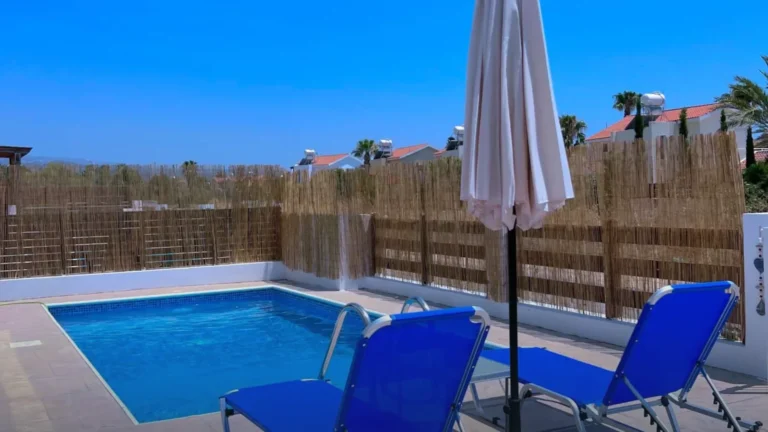
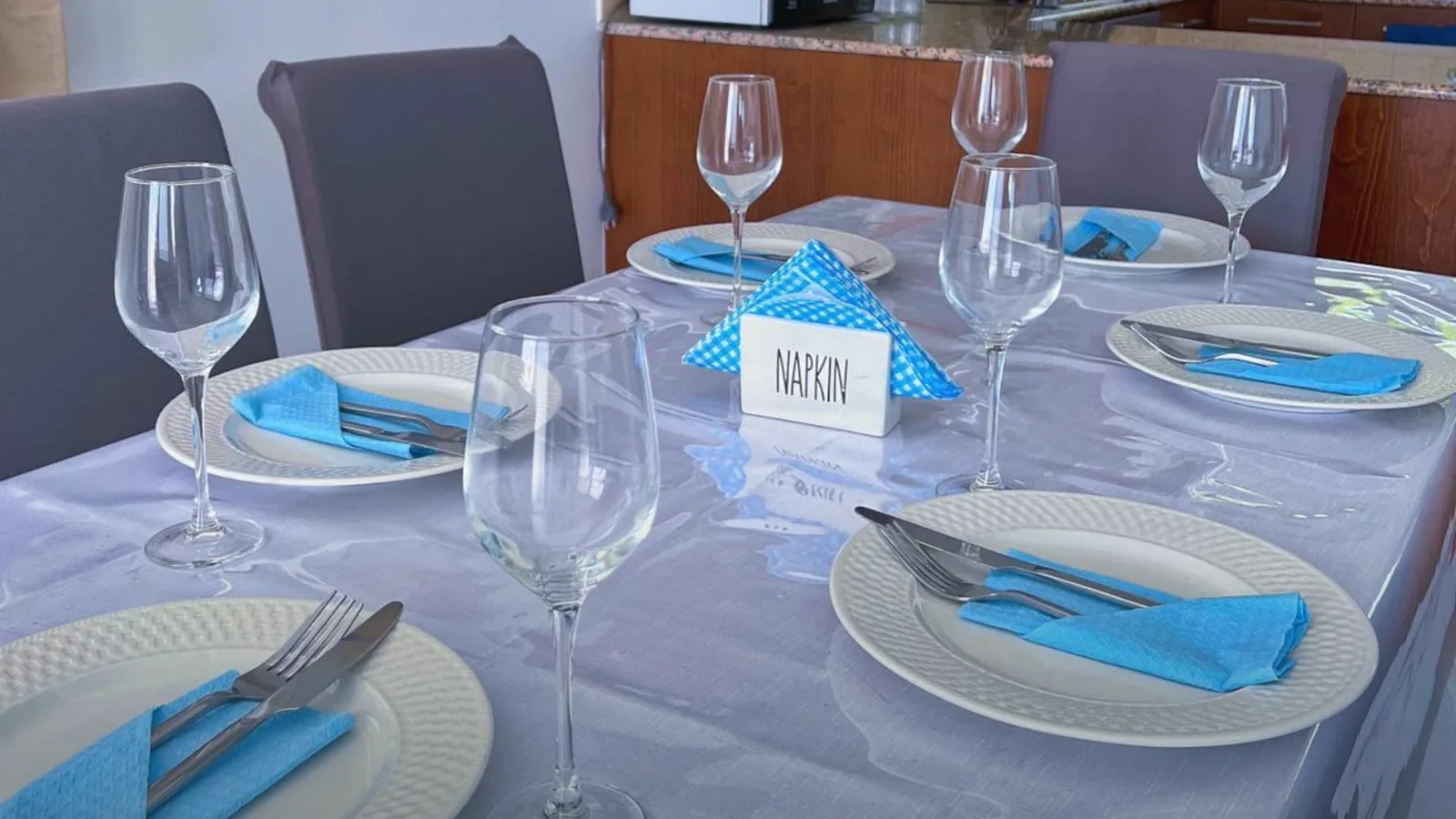
For a traditional meal in a Cypriot village, head for the wine villages on the Laona plateau or the mountain villages of the Troodos – ideas are in our guide to the best excursions from Paphos. And if you prefer to cook: both of our villas have a fully equipped kitchen and a barbecue area outside, so halloumi and lountza from the market go straight on the grill.
Cyprus Food Tours from Paphos
Food lovers who want to taste halloumi, wine and village specialities straight from the producers can book a guided tour. You don’t have to drive the mountain roads yourself, and you can enjoy the wine tasting.
Troodos: food and wine tasting tour with meze lunch
Around 8.5 hours with pickup, including from Paphos: 4–5 stops at village producers (for example halloumi, honey, olive oil), a winery and a full meze lunch at a village taverna. Small group of up to 6, English-speaking guide.
Paphos: wine and halloumi tasting with a monastery visit
Around 5 hours with pickup in the Paphos area: a family winery, a halloumi producer in Axylou and Chrysorrogiatissa Monastery. According to the provider, you pay for the tastings on site.
Cyprus Food: Frequently Asked Questions
What is the national dish of Cyprus?
There is no official national dish. The most typical Cypriot food is meze, halloumi, souvla and kleftiko.
Is it expensive to eat out in Cyprus?
According to Visit Cyprus, a meze at a taverna with one drink costs around €28 per person (as of March 2025).
What is halloumi made from?
Halloumi is made from sheep’s and goat’s milk, sometimes with cow’s milk, and contains mint. Since 2021 it has been a Protected Designation of Origin from Cyprus in the EU.
Can you eat vegetarian in Cyprus?
Yes. A meze includes plenty of dips, salads, halloumi and vegetable dishes. Just mention that you don’t eat meat when you order.
Conclusion
Food in Cyprus is about sharing, taking your time and trying a little of everything. Order a meze one evening, buy halloumi and lountza at the market in Paphos and finish with a Cypriot coffee or a glass of Commandaria. Our advice from Coral Bay: ask at the taverna what is fresh today – the best dishes are often not on the menu.
Sources: halloumi PDO, registration and application from 1 October 2021 according to the Cyprus Press and Information Office (12 April 2021) and Implementing Regulation (EU) 2021/591; milk and mint according to the Cyprus Ministry of Agriculture; halloumi, anari, trahanas, kolokasi, lountza, loukaniko and sweets according to the Gastronomical Map of Cyprus (PIO 40/2022); meze of up to 30 dishes, kleftiko, souvla, sheftalia, afelia, stifado, tavas, koupepia, loukoumades, Cypriot coffee and Commandaria according to the Cyprus Tourism Organisation, Flavours of Cyprus; kleftiko herbs, makaronia tou fournou and spoon sweets according to Cyprus Mail (9 December 2025); protected products according to Taste Cyprus and Cyprus Mail (10 July 2024); Commandaria (14 villages, grapes, name) and zivania (strength) according to Wikipedia (Commandaria, Zivania); meze and halloumi prices according to Visit Cyprus (as of March 2025), see our guide to currency and prices; tours according to GetYourGuide (read 9 November 2026). Updated: November 2026.
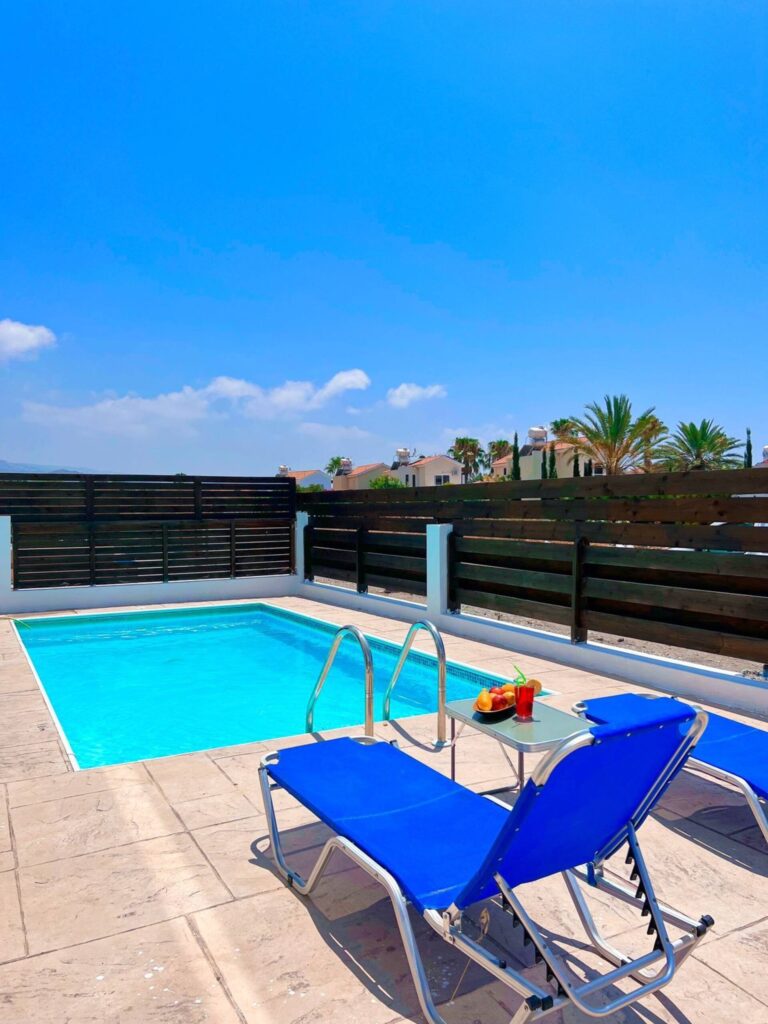
Your Place to Stay in Coral Bay
Two private pool villas with sea views, a fully equipped kitchen and a barbecue area – just a few minutes from the tavernas in Coral Bay and Peyia. Booked directly with your host.
Check availability